

The short version
- Couples who hired a florist spent $2,800 on average in The Knot's 2026 study (median $1,900), and flowers and decor together take about 8 to 9% of what US couples spend.
- A bridal bouquet runs $250 to $350; centerpieces have the widest range, $100 to $500 each.
- A florist's quote adds delivery, setup and teardown at the end.
Couples who hired a florist spent $2,800 on average in The Knot's 2026 Real Weddings Study (the median was $1,900, and 59% of couples hired one), and flowers and decor together take about 8 to 9% of what US couples spend (The Knot). That covers bouquets, personal flowers, ceremony pieces, centerpieces, and the delivery, setup and teardown that a florist's quote adds at the end. The range is wide because the category is made of pieces, and you choose the pieces. Here they are, priced.
The pieces, priced
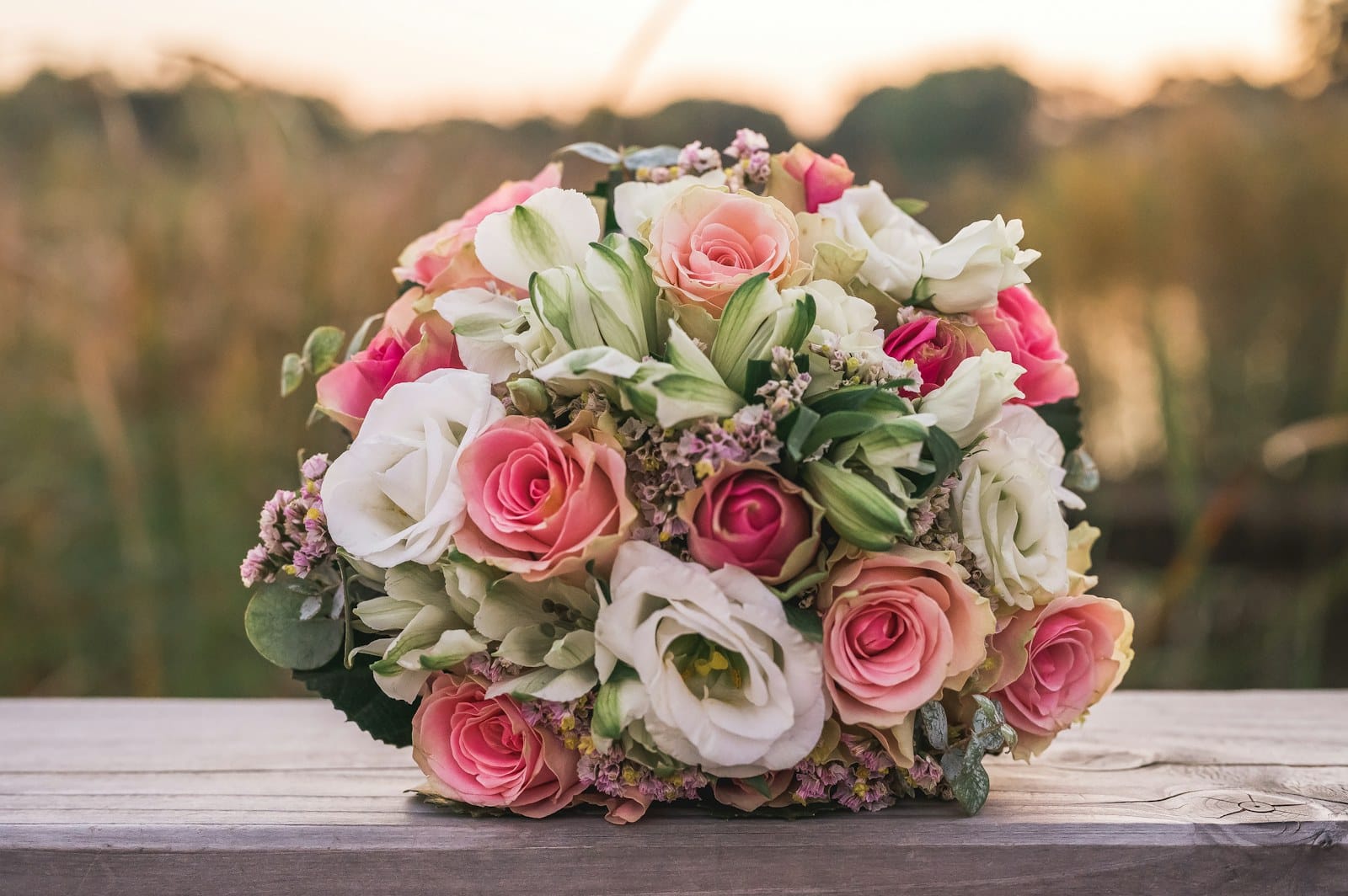
- Bridal bouquet: $250–350
- Bridesmaid bouquets: $65–125 each
- Boutonnieres: $20–35 each
- Centerpieces: $100–500 each — the widest range on the list, from a bud vase to a tall arrangement
- Ceremony arch or focal piece: $400–1,500 and up
- Installs (hanging florals, flower walls, ceiling pieces): from about $1,000, and they climb fast
- A floral mockup (a paid sample of the bouquet or a centerpiece before the day): $75–200, worth it for a big-budget design
Then the line most couples forget: delivery, setup and teardown at 15–25% on top of the flowers. It is normal, but it must be on the quote.
A worked example, 100 guests
As an illustration from the middle of those ranges: one bridal bouquet ($300), four bridesmaid bouquets ($380), six boutonnieres ($150), twelve centerpieces at $200 ($2,400) and a ceremony arch ($800) come to $4,030 in flowers; add 20% for delivery, setup and teardown and the florist's bill is about $4,840. Swap the tall centerpieces for low ones at $120 and the same wedding is about $3,700. Add a hanging install and it is $6,000 before anyone has bought a peony.
Where the money actually moves
- Repurposing. Ceremony flowers that move to the reception — the arch pieces become the head-table arrangement, aisle arrangements become centerpieces — are the single biggest saving in the category. Ask every florist how they would do it.
- Greenery-heavy design. Meaningfully cheaper than bloom-heavy, and it photographs beautifully.
- Seasonality. Peonies in October are imports at up to triple the price. A florist who knows the season will steer you; one who says yes to everything is the one to worry about.
- Fewer, bigger tables. Centerpieces scale with the table count, not the guest count.
What the quote needs
A stem-and-piece breakdown (not a lump sum), the delivery, setup and teardown fees stated, and the substitution policy in writing — weather kills crops, and you want to know who decides the swap. Ask for photos of their work at real weddings, not mood boards; anyone can pin.
When to book
Book 6 to 8 months out; final counts go in 3 to 4 weeks before. The florist sits in the eight-month block of the planning checklist, after the venue (which decides what is allowed to hang) and the palette.
Finding one
Wedding florists by city are listed below, each with its rating and sources. The Genie can turn your rough budget into "what this realistically buys" and draft the outreach that asks about repurposing and substitution.
Figures are typical US ranges, not quotes — the same ranges our planning assistant uses in chat. Confirm pricing and fees with the florists you interview.
Ready to talk to real vendors?
The WedGenie directory lists vendors with photos, Google ratings, and cited sources — browse a city below or see every city we cover.