

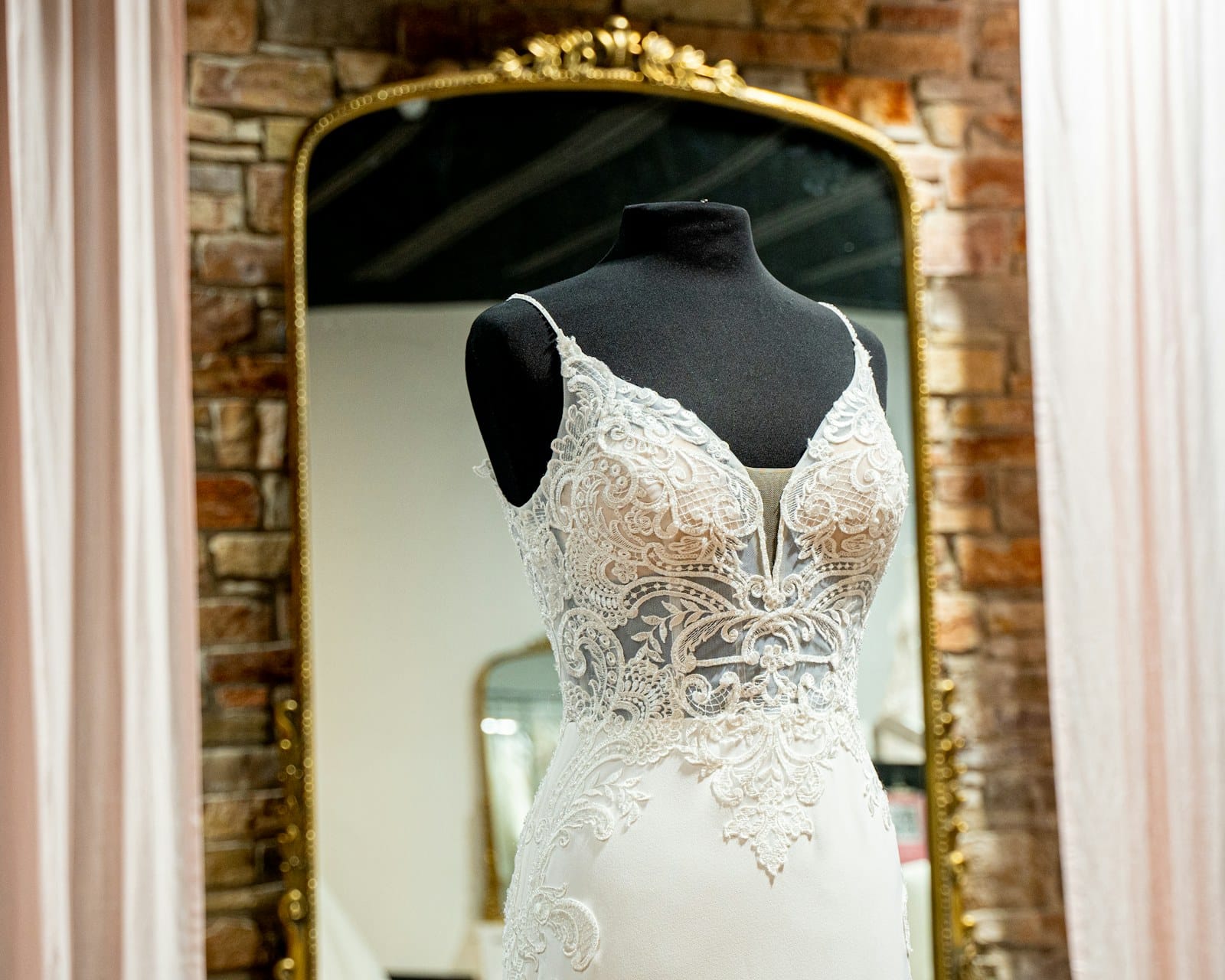
The short version
- A typical US wedding gown runs $1,200 to $3,500, with designer work starting around $4,000.
- That sticker price is only about seventy percent of what you will actually spend.
- Alterations are almost never included: the typical range is $250 to $800, and $400 to $800 is a safe budget.
Ask what a wedding dress costs and you'll get the sticker answer: a typical US gown runs $1,200 to $3,500, with designer work starting around $4,000 and climbing from there. That range is real — and it's also only about seventy percent of what you'll actually spend to walk down the aisle in the dress. The rest hides in three line items that almost never make the first budget draft.
The alterations bill is not optional
Nearly every gown gets altered — hems, bustles, cups, taking the bodice in or letting it out — and alterations are almost never included in the dress price. Typical range: $250 to $800, and a safe budget is $400 to $800 for a typical gown. Structural changes (reworking a neckline, adding sleeves) push past that. Two practical consequences:
- Ask every shop what alterations run before you fall in love. Some salons quote à la carte, some flat-fee. The same $1,800 dress can cost $2,100 or $2,600 out the door depending on the answer.
- Buy for the closest fit, not the smallest size. Taking a dress in is routine; finding fabric to let one out is not.
The accessories add a few hundred more
Veil and accessories typically run $150 to $500 — and the veil is the sneaky one, because salon veils can cost several hundred dollars for what is, structurally, a hemmed piece of tulle. If the budget is tight, this is the single easiest category to trim: simpler veil, borrowed jewelry, shoes you already love.
So the honest all-in math
For a typical (not designer) gown: $1,200–3,500 for the dress, plus $250–800 alterations, plus $150–500 accessories — call it roughly $1,600 to $4,800 all-in, with most couples landing in the middle. In a full budget, attire gets about 5% of the total, with hair and makeup another 1% (The Knot's 2026 study puts attire and beauty together at 6%; here's the whole split). On a $40,000 wedding that's $2,000 for both partners' outfits, which is exactly why the ranges above matter.
And the suit?
For the other half of the couple: a purchased suit typically runs $400 to $1,200, a tux rental $150 to $350. Made-to-measure beats rental on fit if it'll be worn again — a wedding suit that becomes the good suit is one of the few wedding purchases with a second life.
Where the real savings are
- Sample sales and trunk shows save 30–50% on the same dresses — the single biggest lever in the category. Timing your shopping around them beats negotiating any day.
- Off-the-rack and pre-loved gowns skip the made-to-order premium entirely; budget alterations either way.
- Order early. A made-to-order gown takes 16 to 20 weeks to arrive, then 8 to 12 weeks of alterations, so order 8 to 10 months out (the full timeline has the order window there). A rush order is schedule tax — the same dress, usually costing more because the calendar got tight.
Try the look before you commit the money
If you're deciding between silhouettes — ballgown vs. fitted, sleeves vs. strapless — our AI dress try-on shows you yourself in different dress styles from a single photo, free, before you ever book a salon appointment. It won't replace the fitting room; it will shortcut the "do I even suit this shape?" question that eats the first two appointments.
Figures are typical US ranges, not quotes — the same ranges our planning assistant uses. Salons in major metros run higher; regional markets run lower. Always confirm current pricing with the shops you visit.